近期,浙江大学中国农村发展研究院汪笑溪研究员团队与波茨坦气候影响研究所(PIK)、中科院遗传所、农业农村部经济研究中心、中国农业大学、柏林洪堡大学、食物系统经济委员会(FSEC)等相关团队合作的论文“Reforming China’s fertilizer policies: implications for nitrogen pollution reduction and food security”在Sustainability Science在线发表。Sustainability Science是SCI一区期刊,5年影响因子为7.934。
本研究基于汪笑溪团队开发的MAgPIE-China模型,与计量经济模型进行耦合,评估了中国化肥政策改革(包括化肥零增长政策、取消化肥生产补贴政策以及更具雄心的氮税和碳税措施)对化肥施用量、氮污染排放以及粮食安全的影响。本研究也是目前运用MAgPIE(Model of Agricultural Production and its Impact on the Environment)综合评估模型, 研究与分析中国问题的首篇文章。
文章概要:
氮肥是农业生产的必需养分,但是过量的氮会导致温室气体、空气和水污染等环境问题。为满足不断增长的粮食需求,中国成为世界上氮肥消费最多的国家,研究氮肥的施用对环境和经济的影响对于中国来讲尤为重要。本研究运用农业经济土地利用模型(MAgPIE-China),结合双重差分模型(DID),对近年来中国开展的化肥政策改革包括取消化肥生产补贴和为提高农业养分管理效率而实施的农业养分管理措施等进行了前瞻性评估, 为我国实现农业高质量发展提供了科学依据。
研究发现,提高土壤氮素利用率、促进禽畜粪污利用以及取消化肥生产补贴等措施的综合改革可在2030年和2060年分别减少14.4和13.5 Mt的氮肥施用,而更具雄心的养分管理措施和氮税的政策组合可进一步实现6.8和10.1 Mt的氮肥减施量。氮肥减施可减少较为可观的氮素损失和氮污染,同时保证粮食安全基本不受影响。结果表明,化肥政策改革可使中国的氮残留维持在行星边界(26Mt)以下,而更具雄心的政策组合可使1995-2060年N2O累积排放量减少31.8%。
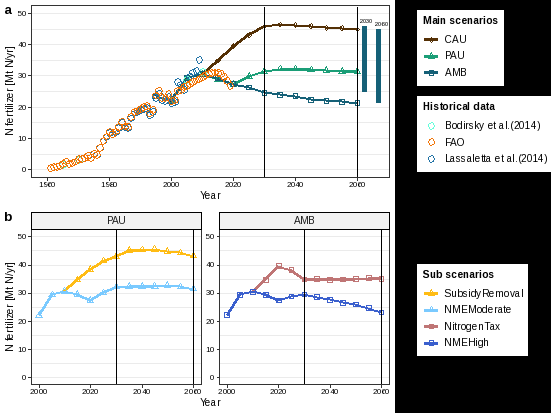
图1 主情景(a)和子情景(b)下的中国氮肥施用量
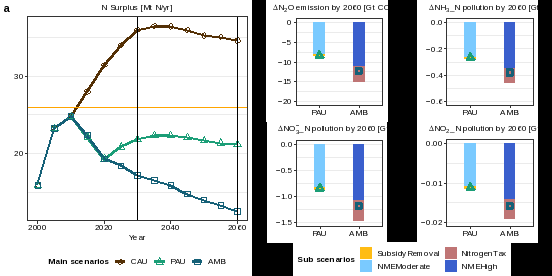
图2 a. 2000-2060年主情景下的中国氮素损失;b. 2060年主情景和对应子情景相较于基准情景的中国氮污染(N2O, NH3–N, NO3 −N和NO2–N)的累积减排量
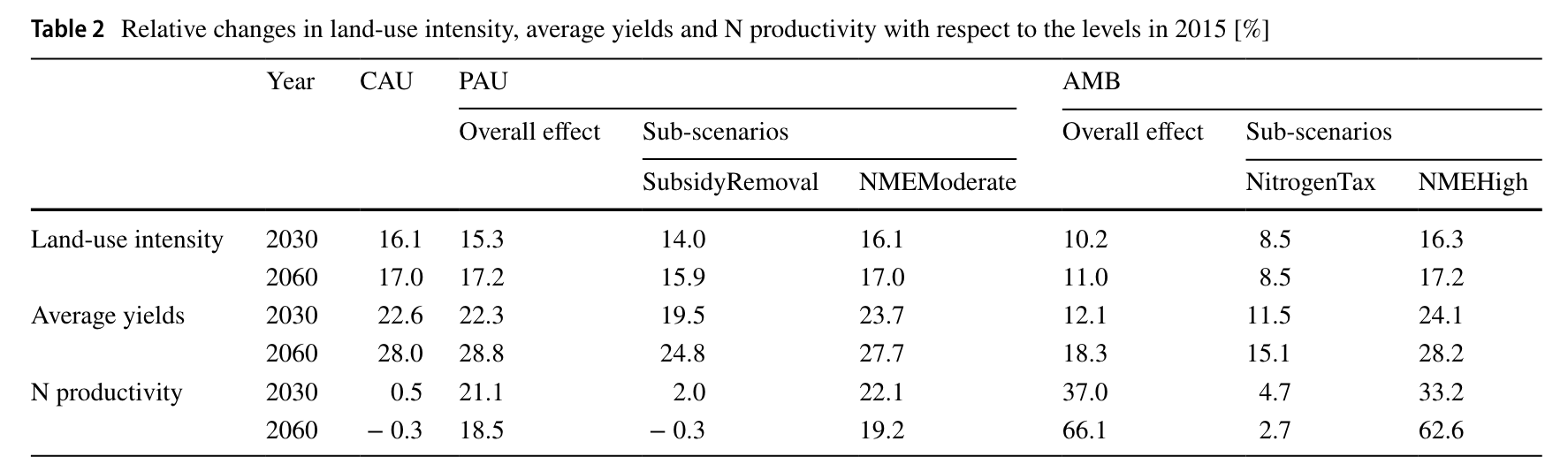
从单个政策或措施来看,提高农业养分管理效率有助于提高耕地生产力,并减少耕地扩张,对环境改善和粮食安全具有协同效应,也对实现中国化肥零增长和农业高质量发展目标具有决定性意义。面向生产投入端的取消化肥补贴政策对减少化肥施用的效果较小,而面向非期望产出的氮税和碳税政策对温室气体减排效果显著,但会引致较高的粮食价格和较低的粮食自给率。
英文摘要
Reactive nitrogen (N) is a requisite nutrient for agricultural production, but results in greenhouse gas and air and water pollution. The environmental and economic impacts of N fertilizer use in China are particularly relevant, as China consumes the largest amount of N fertilizer in the world to meet its soaring food demand. Here, we use an agro-economic land system model (MAgPIE) in combination with a difference-in-differences econometric model to provide a forward-looking assessment of China’s fertilizer policies in terms of removing fertilizer manufacturing subsidies and implementing measures to improve agricultural nutrient management efficiency. Our model results indicate that enhancing soil N uptake efficiency and manure recycled to soil alongside fertilizer subsidy removal can largely reduce N fertilizer use and N losses and abate N pollution in the short and long term, while food security remains largely unaffected. Enhancing soil N uptake efficiency appears to be decisive to achieving China’s national strategic target of zero growth in N fertilizer use. This study also finds that improving agricultural nutrient management efficiency contributes to higher land productivity and less cropland expansion, with substantial benefits for the environment and food security.
原文下载链接
https://link.springer.com/article/10.1007/s11625-022-01189-w